The Art Direction in Video Games
by hikosan (12-May-2026)
Blizzard's games have a unique artistic style. But that is compared to other video games. Most of Blizzard's own games feel the same: I would describe it as Blizzard to video games is what Disney is to animation films. But is this a bad thing? Not necessarily! There are many video game developers who have their artistic direction consistent across the games they develop. Take FromSoftware as an example--there are a few themes they are focusing on: dark fantasy, samurai, and mecha. Their recent titles, which include Souls series, Bloodborne, Sekiro, and Elden Ring, all received critical acclaim. Other than being dark fantasy games, they share the same stylistic and game design elements, and the art direction in those video games is virtually the same. What I like about those games is that there is a logical progression in the evolution of their game design. You can trace their roots back to King's Field--their first video game released in 1994--and see the general vibe of playing a FromSoftware title is still there.
Such video game companies do what they are good at--establish a working pipeline and stick to it, at least as long as it is successful. This is true for most game developers. There are some that do have a range of different genres they worked on, with distinctive styles, for example BioWare who made Baldur's Gate, MDK2, KOTOR, Dragon Age, and Mass Effect. Or Ubisoft with their Rayman, Prince of Persia, Assassin's Creed, and Tom Clancy's series. Ubisoft is also developing the strategy game Anno, and the first-person shooter Far Cry, but it's a little bit nuanced--they are not the original creators of those games, as well as Prince of Persia and Tom Clancy's games. Many video game companies underwent mergers or acquisitions, some established subsidiaries or departments that work exclusively on certain titles, and because of that, there are game titles that have "changed hands", which put them in the danger of having their visual identity changed. To understand the reason why the visual identity of the game changes you have to look into company's politics.
When fans love the games that they play, what makes them more excited is for the potential sequel to be a logical continuation of the same experience that they got by playing the game. The loved game is not necessarily first one in the series--it can go as far as being the fourth installment in the game's series. For example, Call of Duty 4: Modern Warfare--a 2007 first-person shooter developed by Infinity Ward--is the fourth game in the series, it has a storyline which is not necessarily interesting, but the way the characters engage with you, and the way that the world is designed makes everything feel real, simply because it is based on modern warfare tech, not even a science fiction. And it is more loved than the previous games in the series. It was followed by two sequels that were just as good, mainly because they were extending that same experience from the first game. There are many other examples, including Final Fantasy VII, Resident Evil 4, Tekken 5, Monster Hunter: World, etc.
So, that "logical continuation" means that you preserve the artistic direction, the music, the gameplay mechanics, and the general "feeling" of the game. Even minor changes can ruin the experience. One game that comes to my mind is BioShock--its first game is a masterpiece, but it cannot be said about its sequel BioShock 2. The reason BioShock 2 is boring (well, if there are actually people who liked it, then I have to be more specific and say that it was boring to me) is because the gameplay was unlike the first game: very repetitive--same empty corridors; you understand the point of the game early on, but it lacks any meaning in the long run; the weapons aren't as satisfying; and some other things I already forgot about. But the third game, BioShock Infinite, is suddenly just as fun as the first game. You could say "they" learned from "their" mistake. Or, it would make more sense if you know that the first and third games were designed by Ken Levine at Irrational Games, while the second one was made by a completely different developer--who was previously only in charge of porting the first game--just for the sake of it. Woah! Turns out, politics does play role in the way how the games turn out to be.
For some game titles that ended up in different hands--they changed not only in the visual style, but the genre itself. For example, Fallout is a 1997 role-playing game developed by Interplay Productions who in 2007 sold the Fallout IP to Bethesda Softworks. That game went from a tactical isometric turn-based post nuclear role-playing game to an allegedly-role-playing gamebryo-infected bug-ridden 3D-action-shooter derivative severely abused by Bethesda. You can call it a radically reimagined experience as it plays as a completely different video game. On the other hand, Arcania--a game developed by Spellbound Entertainment whose previous games did not include RPGs--was supposed to be the "logical continuation" of the Gothic series (originally developed by Piranha Bytes), and its publisher JoWooD Entertainment aimed for it to be the best RPG game of the 2010s. But JoWooD, being the exact reason why Gothic 3 was bad, didn't learn from their mistake, so upon the release of that absolute abomination of gaming experience, the game was so bad, and so hated by the fans, they had to drop "Gothic 4" from the title, and JoWooD going bankrupt as a cherry on top. In parallel, the original developers of the series shipped their own game--Risen, which was pretty good and loved by the fans with the only massive problem being its disappointing ending.
But what does this have to do with Blizzard? They seem to have a pretty good track record of releasing high quality games: WarCraft, Diablo, StarCraft, HearthStone, and Overwatch--all seem to be very well made and beautiful and loved by fans. They take quality seriously, hire good artists and musicians, so what's the issue here, if there is any? My focus is going to be on one of their games--Diablo. But let's first understand what is Blizzard. It started as "Silicon & Synapse" in 1991 by three newly graduated students--Michael Morhaime, Allen Adham, and Frank Pearce--who each invested $10,000 from own pockets to start the business focusing on game ports, before they released their first video games for the SNES platform. After that, they: changed their name to "Chaos Studios"; started the development on Wrcraft: Orcs & Humans; were deep in debts; got acquired by "Davidson & Associates"; another company named "Chaos Technologies" claimed its trademark rights, after which they were forced to rename again, this time to "Ogre Studios"; and the new name not being liked by the new owner forced them to rename again, finally to "Blizzard Entertainment".
In 1993, another game company was founded under the name "Condor" by David Brevik, Erich Schaefer, and Max Schaefer, who wanted to create a roguelike game inspired by Dungeons & Dragons. That game was Diablo. It was supposed to be pure role-playing and turn-based (possibly, similarly to Fallout), but one of its programmers showed a demo of a real-time system which changed director's mind and allowed them to ship one of the first games of its kind. 9 months before its release, they were acquired by Blizzard and renamed to Blizzard North, however they still had a complete autonomy from their new owners, and were able to ship a sequel and later an expansion pack. Both of the games were highly successful, including the expansion pack--Diablo II: Lord of Destruction--being my personal favorite of Diablo series. They started working on Diablo III, however the new owner of Blizzard, Vivendi Games, intended to sell the company, which made the executives of Blizzard North to send them an email threatening to resign. Instead of communicating their intentions, Vivendi Games accepted their resignation and that made the executives--and other employees--leave the company to found their own game studios: Flagship Studios (released Hellgate: London, then ceased operations), Hyboreal Games (failed), Castaway Entertainment (failed), and recently MoonBeast Productions (planning to release Darkhaven).

As with the golden RPG titles of yesteryear, Diablo's premise is very simple: Find evil things and smite them repeatedly. The tricky bit comes in deciding just how to smite them, and how to do it without getting seriously killed.
Trent Ward (01/23/1997)
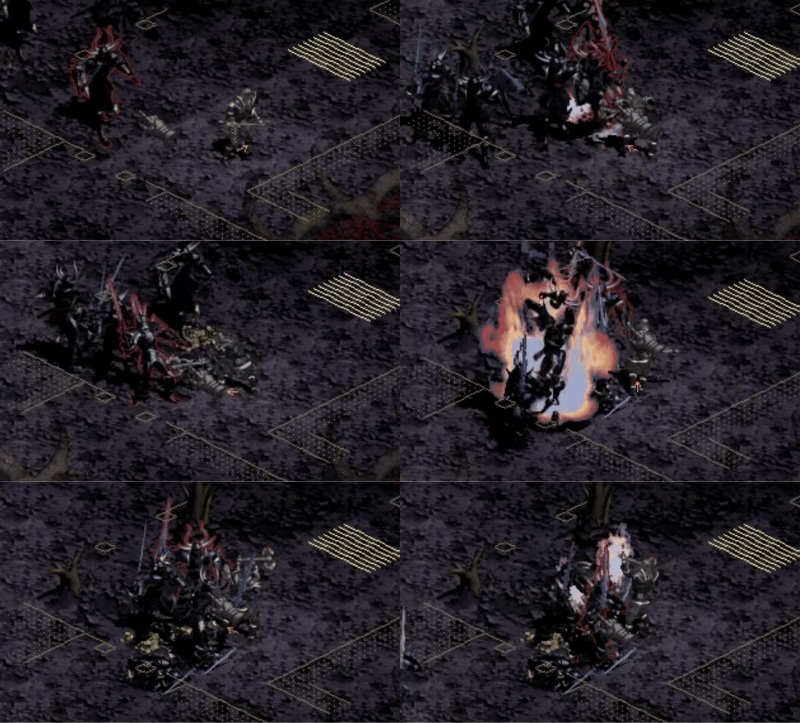
Diablo is, essentially, a hack-and-slash game. This cathedral consists of many different floors, and, basically your entire goal is to make it to the bottom. Of course, as you make your way downward, monsters will get progressively harder. The town you started in, and the cathedral where your fighting takes place, is all there is to the game.
TerrisUS (05/13/2005)
You could tell that there is a great amount of detail in the city and dungeons. Bones and corpses will be lying around, adding a creepy and frightening feeling that goes with the dark atmosphere. In dungeons, where it is dark and absent of light, your character can only see so far, until it fades to darker black, which is of course realistic.
maximus86 (08/27/2002)
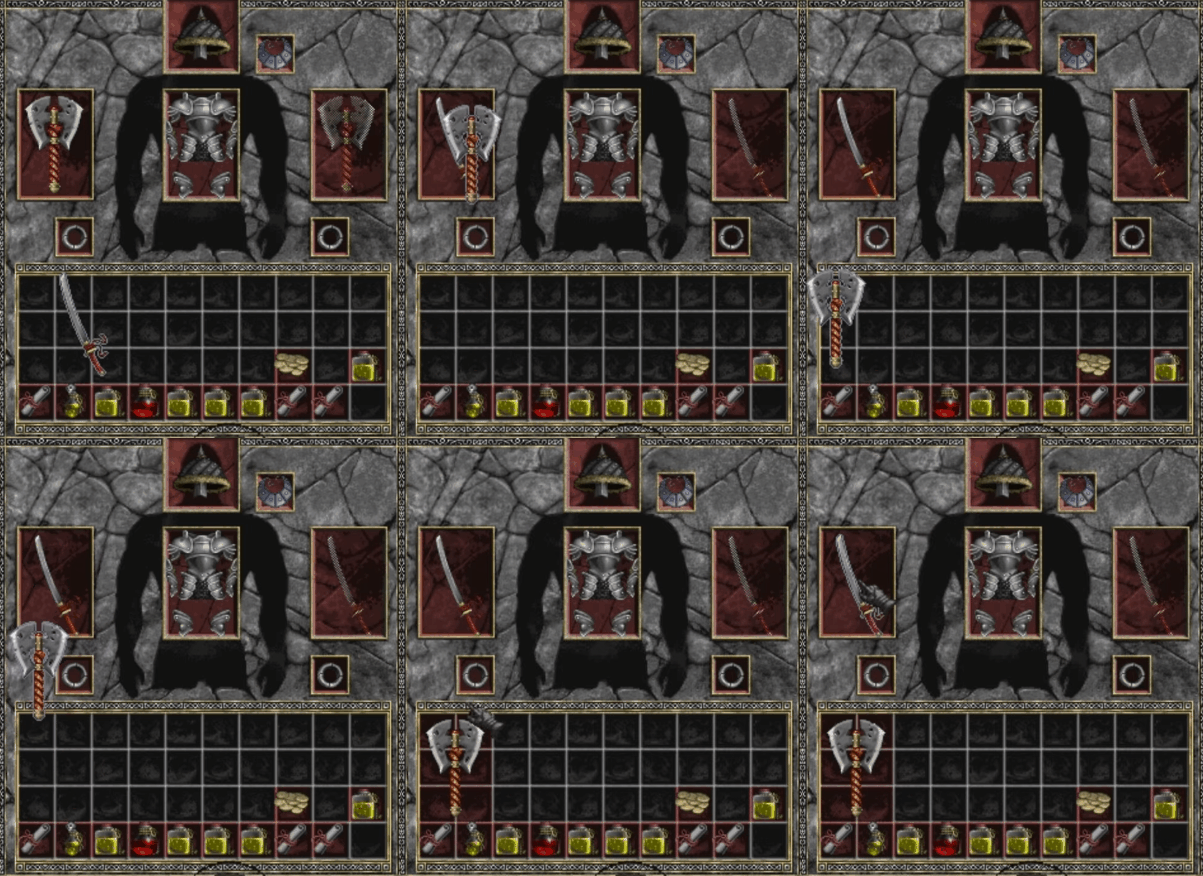
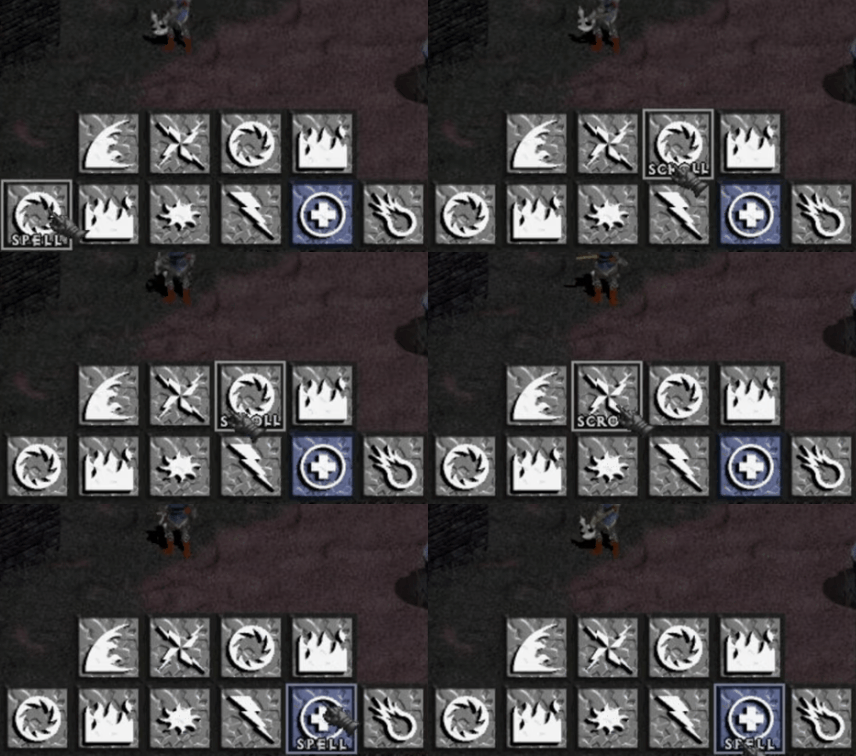
Aside from story the interface is mostly clean and easy to use. You’ve got a section reserved for potions and scrolls, a quest log and character stats tab on the right, along with map and menu tabs, and on the left you have your inventory and spellbook tabs.
Zork_Wesker (11/01/2006)
The music is absolutely phenomenal, eerie, and is perhaps embedded into the minds of true gamers everywhere. The somber guitar strains of Tristram's town music, the famous Cathedral dungeon music (further immortalized by being redone in Diablo II as a piece called "Spider"), the haunting Catacombs music, the unnerving panting and dissonant strings of the Caverns, to the magnificent opus of abstract harmony, punctuated by a distant, repeating flute motif, of the music of Hell, all of it is absolutely mind-blowing and atmospheric. In terms of Blizzard canon, I don't think the music of Diablo has ever been exceeded in quality.
solipsa (04/16/2008)
Diablo III was handed to new directors at Blizzard Entertainment, with new producers and designers and programmers, and pretty much new staff. Before Diablo II: Lord of Destruction was released in 2001, Blizzard released Warcraft II (1995), The Lost Vikings 2 (1997), and StarCraft (1997) with three add-ons released in the same year. All those games feature the same visual style--they look cartoonish. That's compared to Diablo, which has dark tones: Gothic architecture, dungeons infested with demons, ruins, corpses of innocents who were once tortured in cold blood under rain. You were given a background consisting of several paragraphs to know what happens to a title when it changes hands. Well, Diablo III ended up having three revisions before it finally released in 2012. It looked and felt completely different from the previous games, just like if it was its own game, the only similarities being the use of the Exocet typeface and the classic health/mana orbs as part of the graphical user interface (GUI). Don't get me wrong--I am not saying it's a bad looking game, like in my previous examples--no. It actually looks beautiful, and it adheres to the Blizzard's standards of shipping good quality games. It's still dark fantasy, and it's still about demons. But it's not Diablo. The art direction completely changed the atmosphere of the game, now it looks similar to their other games. It looks like it's a cheap mobile version of the actual game infested with microtransactions (they actually delivered that, too). For instance, Diablo II: Resurrected would've been a better contender to the logical continuation of the series.
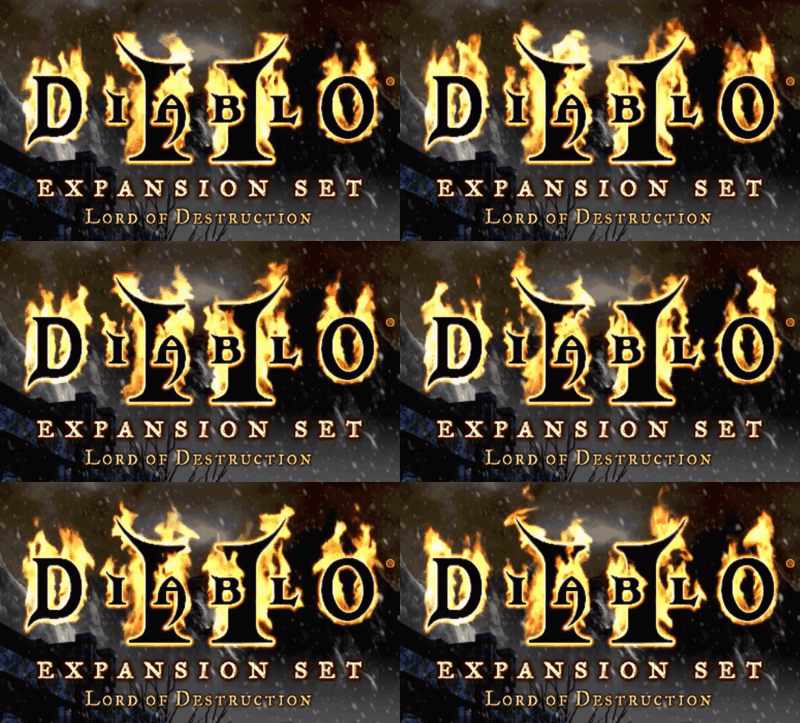
This review doesn’t matter. There were 1.5 million pre-orders for Diablo 2 even before it went gold. In its first day in the stores, it sold about 250,000 copies off the shelf. It’s already a smash hit and it doesn’t need any good reviews for that.
Nebojsa Radakovic (07/01/2001)
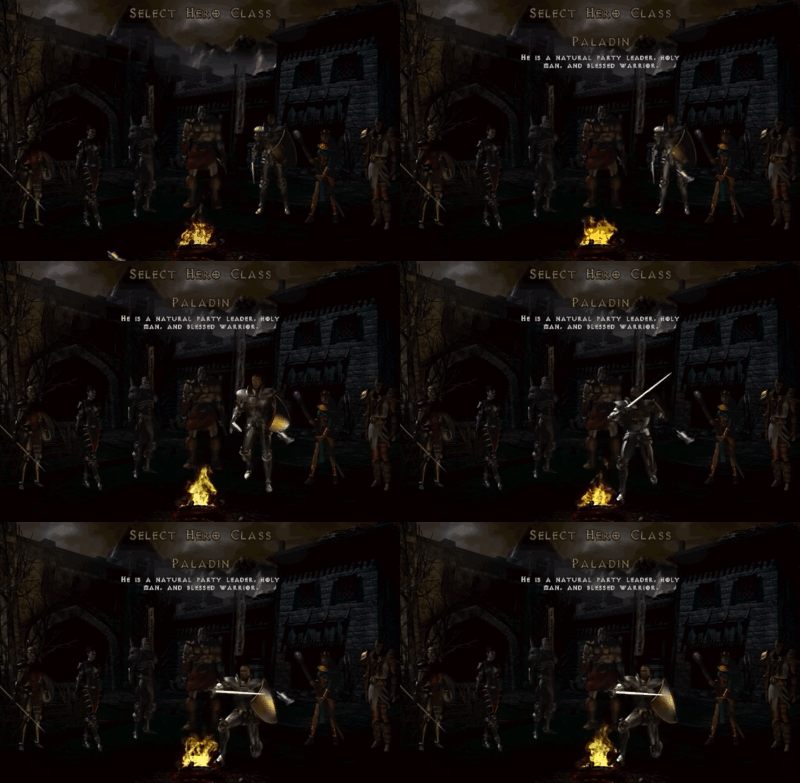
The replay value of this game is absolutely amazing. There is so much equipment it is mind boggling. And with 5 different character classes, you will absolutely NEVER get bored of this game. ESPECIALLY the multiplayer.
Tyrant_007 (08/31/2000)
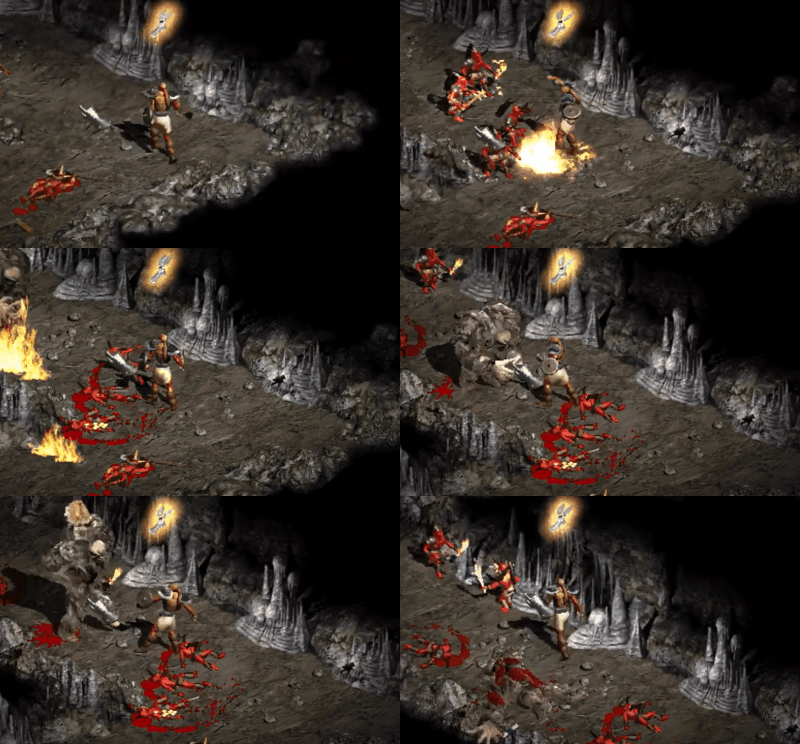
The map is randomly generated, so you may just have to go to a completely different place for all your quests every time you start up a new game, and because of the randomness of the thing you won't be able to see on your handy-dandy map any place you haven't visited before!
KingBroccoli (11/18/2000)
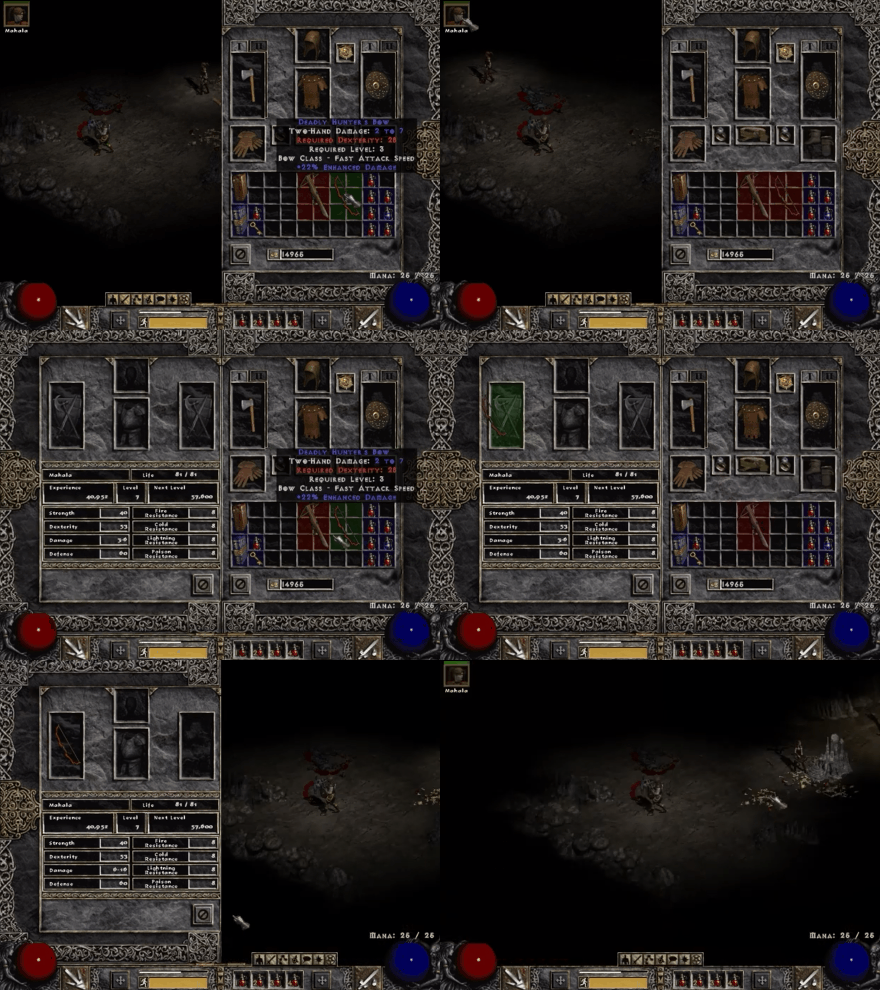
As you progress to the hot desert of Lut Gohlein, through the muddy swamps of Kurast to the final hellish pit of the Chaos Sanctuary, you really feel you've made an epic journey and as the monsters become cleverer, stronger and more numerous you are constantly having to refine your tactics even just finishing the game on Normal difficulty.
falsehead (10/15/2004)
Many game developers have been inspired by Diablo, their games were influenced by the new type of Action-RPG. Among those games are: Dungeon Siege, Sacred, Titan Quest, Torchlight, Path of Exile, The Incredible Adventures of Van Helsing, Grim Dawn, Diablo III, Diablo IV, and more. I want to point out that some of these games did a good job capturing the same atmosphere, especially Path of Exile and The Incredible Adventures of Van Helsing. It's evident that this game had a huge impact on the gaming industry, so Blizzard--following on its legacy--had to make sure that they are delivering something that is nothing like its "clones" in order to satisfy its fans. Or... were they?
You see, Blizzard is nothing more than a company that creates a product; and that product has to sell; and for it to sell, it must be engaging. Isn't this the goal of every other game developer? Yes. However, unlike those unknowns who enter the market out of nowhere and aren't afraid to fail, Blizzard takes no risks. It's a large corporation that, if it releases anything remotely undercooked, they might damage their reputation. This is a rule of a corporation who has owners who focus on profit. Therefore, the game must be engaging, and that engagement must be guaranteed so there is no risk to it being unprofitable. And to guarantee that, you must employ industry professionals who will compose and present the thoughtful yap--about color and contrast and "screenshotability" of the scenes--that explains why the chosen art direction is actually the right one.

"F*** that loser."
--Jay Wilson, the lead designer, about series creator David Brevik.
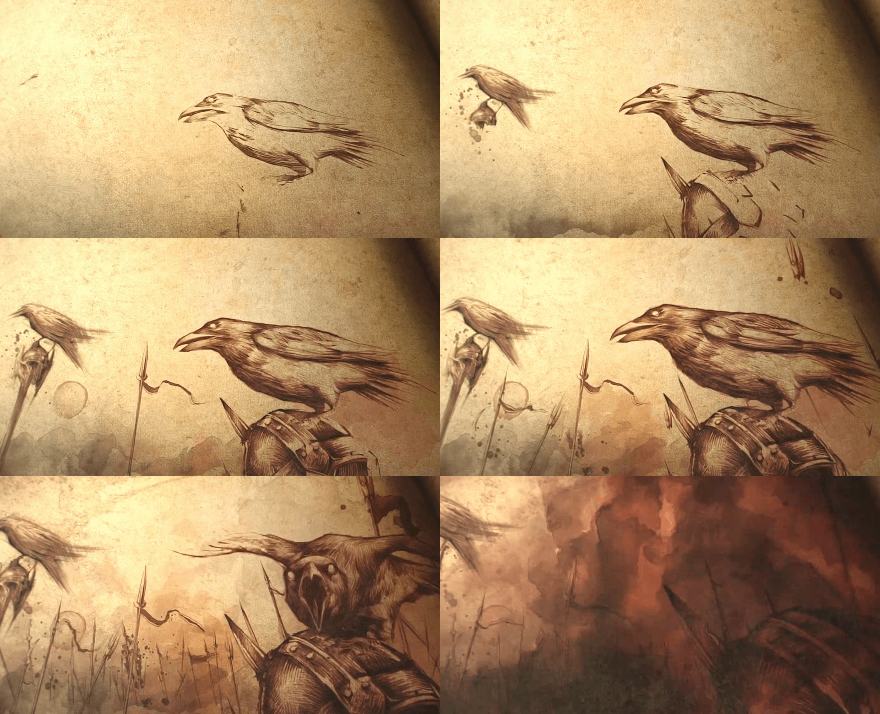
To expand upon how bad the always online aspect is, there is a known issue with Diablo 3 called rubberbanding. What this basically means is that you can expect the game to go smoothly, then you'll see a 2000+ ping, die to thin air, and get disconnected from the server. In standard Blizzard fashion, the fix for this issue actually made it worse.
UltimaterializerX (07/31/2012)
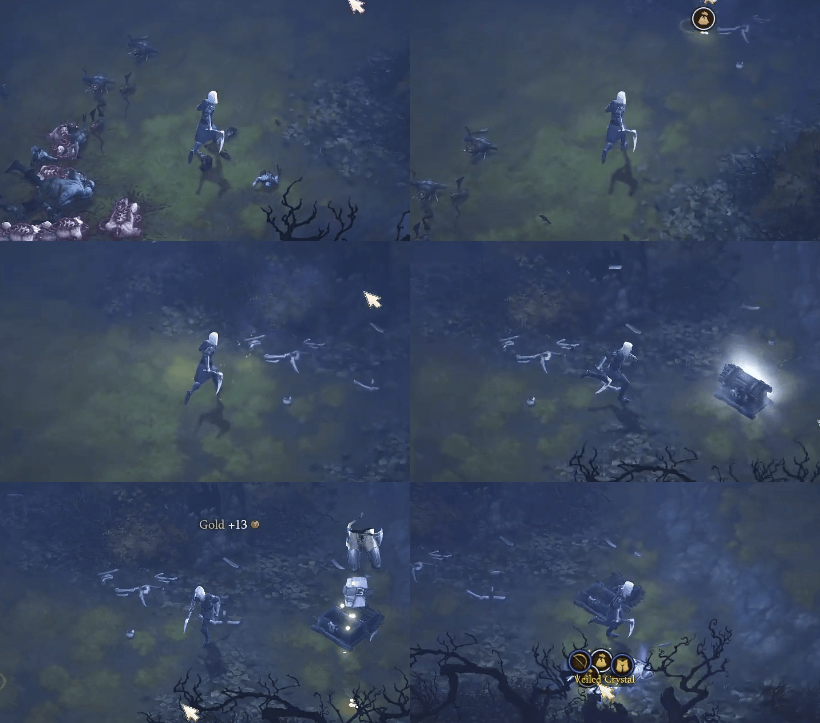
Regarding the game world, maps are not really random at all. There are some random aspects to them but after a few play throughs you'll realise that most of the important things are always in a certain location which really removes any sort of desire to explore.
Ihavealotofspac (05/24/2012)
Halfway through the game, I realized I wasn't playing a Diablo game. So I took a different approach about halfway in and decided I'd treat it as a whimsical game. This didn't help any of the earlier problems however, because the game would be bad for a whimsical as well.
Viridianbarry (05/21/2012)
I am not going to lie, the product they released was a financial success. It was also notorious for being one of the first games to come with a special kind of DRM that only allowed you to play the game while being connected to the internet. Pretty sad. But it didn't come without criticism from the fans. A petition with over 23 thousand signatures was filed by fans who were frustrated by the art direction Blizzard decided to choose for the game. This was back in 2008, when the game was first announced, four years before its official release. Fans were already unsatisfied with how the game would turn out to be. There was no way the game would've ended up looking differently, different from other Blizzard titles. After all, it's part of their branding. We already know it wasn't a flop from the financial perspective (and, perhaps, this is the only thing that matters to those who only develop games for money); so, is there even an incentive for game developers to care whether their game would be loved by the fans? Well, an interesting question that can be asked: would the game have been even more popular, and sell even more, if all that effort that was done was directed towards satisfying the fans?
Think about it--the fans are the core audience. They are the ones who will make sure others are as hyped about the game. The fans create content, the fans encourage friends, the fans establish the fanbase, the fans are the everything for your product. And if you keep ignoring them, who knows what could possibly go wrong. Don't forget what happened to Game of Thrones--one of the most loved TV series in the past decade--the end season of which made the fans "cancel" the show, to the point it became irrelevant overnight. A billion dollar franchise dropping dead because of the directors' decision to end it in the most ridiculous way imaginable.
Sometimes, if not all of the times, a good art direction [for a video game that changed hands] is not about "UX", or your personal biases of what would look good, or what would make the player think it would look good, but the deep engagement with the community, to hear them out, to understand their feelings, to understand what is it about the game that makes them enjoy it. And if that game took a long time to release, the fans would want to revisit that now nostalgic feeling that is not a radically reimagined experience, but a logical continuation that uses the same artistic elements that made that particular game enjoyable.